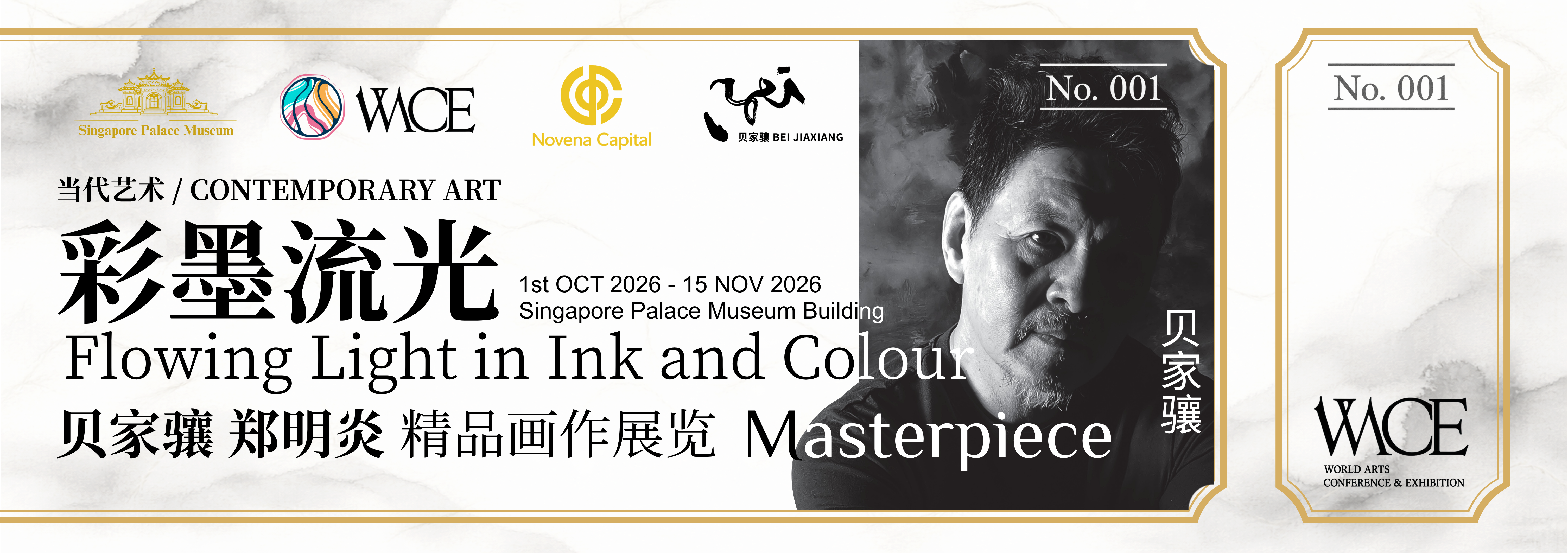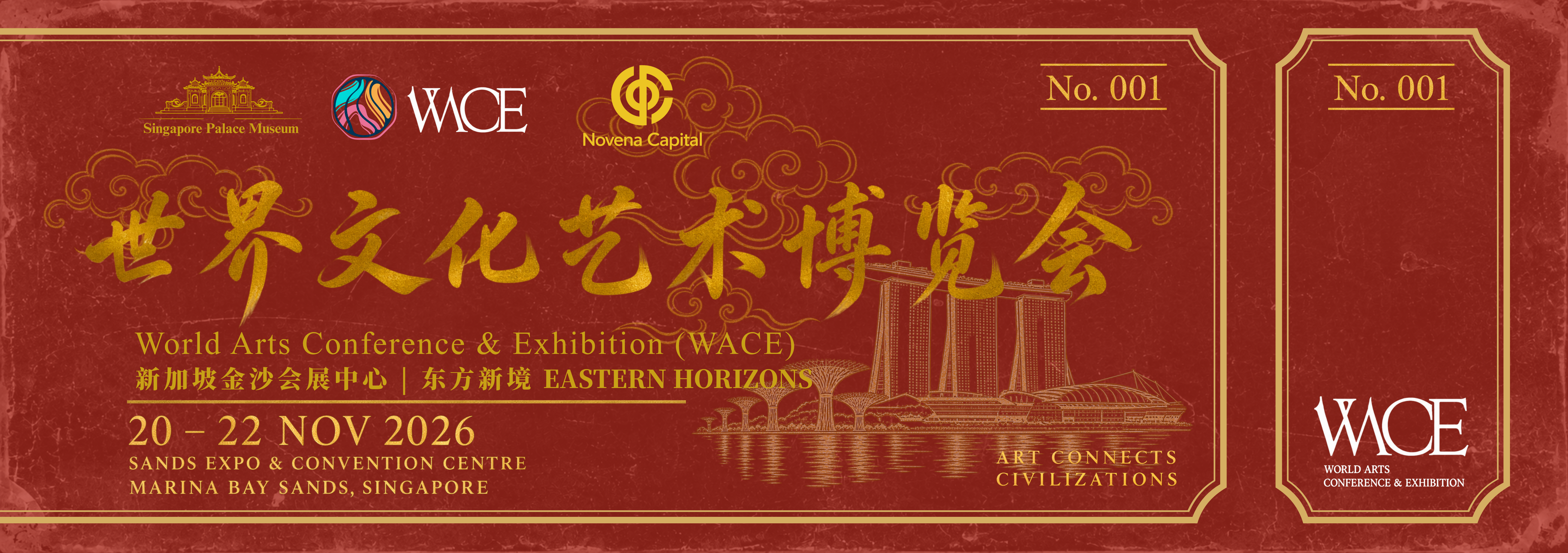
↔ 左右滑动查看完整票券
第一届世界文化艺术博览会
2026年11月20日至22日 · 新加坡 · 滨海湾金沙会展中心 · 四楼牡丹宴会厅(Peony Ballroom, Level 4)
即将举办
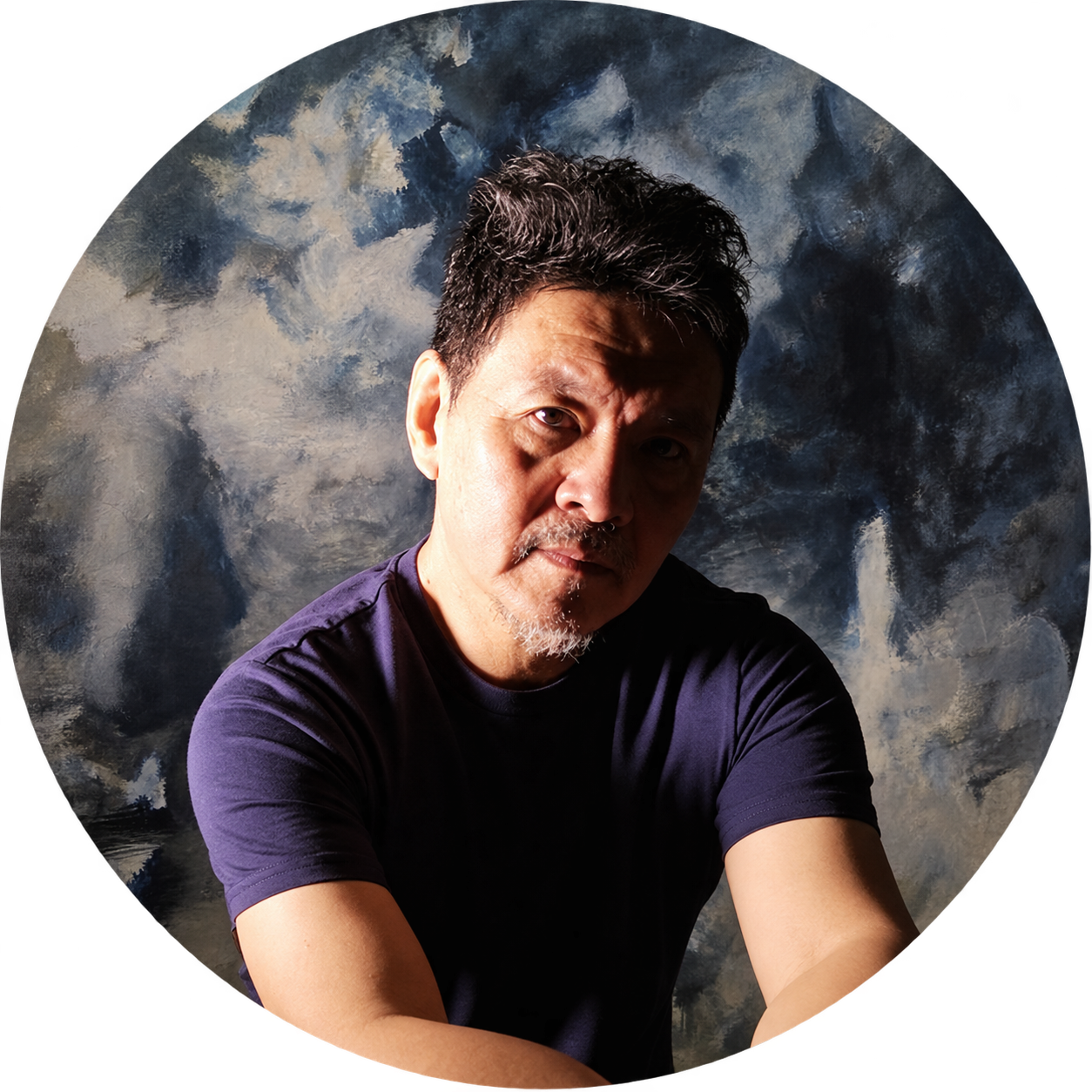
当代著名艺术家
贝家骧,中国当代著名艺术家。
1953年生于上海,祖籍江苏苏州。曾获首届上海文学艺术奖油画一等奖、澳大利亚罗贝尔美术展油画金奖及坎贝尔美术展优秀奖,并入选第六届全国美展;作品被中国美术馆、上海美术馆、澳大利亚电讯公司、日本、韩国、中国台北等艺术机构收藏;曾在中国美术馆、上海海派艺术馆、上海和平饭店等中国地标性场馆举办个展。
在上世纪末旅居海外的华裔画家中,贝家骧尤为难得地重返上海,并在持续创作中收获了学界认可,重新确立了自身的艺术坐标。他以四十余年的实践,探索出一条传统艺术当代转化的有效路径,他在具象与抽象之间辟出一片“第三象”,实现了现实情感与当代审美的深度融合,为当代艺术创作提供了一个兼具人文温度与时代质感的范本。建立在对东西方艺术传统的双重透彻之上,贝家骧的探索既将中国文人画的意象美学与东方精神范式深度植入油画创作体系,又将西方造型意识反哺于水墨实践,由此内生出一套兼具东方底蕴与当代特质的全新绘画语言。他的深耕不仅丰富了艺术语言在当代的转型谱系,更在当代中国意象绘画的发展进程中,锚定了一个承前启后、不可或缺、仍在生长的学术坐标。
1976年毕业于上海师范大学油画专业后,贝家骧一度留校任教。1982年进入中央美术学院首届油画研修班学习。1984年,其毕业创作《昨天、今天和明天》受到美术界关注,该作先后获得首届上海文学艺术奖油画一等奖,入选第六届全国美展,并被中国美术馆收藏。这一时期的创作以扎实的写实功底与学院造型能力见长,奠定了其早期的学术基础。
1991年,贝家骧移居澳大利亚,在跨文化视觉传统的参照下重新审视自身的文化身份。他尝试将中国传统的书法性笔意融入油画创作,探索东西方绘画语言的内在融合。这种双重文化经验的摄取与涵化,构成了他从传统写实走向意象表达的开端。旅澳期间,其作品多次入选当地展览并获奖,先后与中国(上海、香港、台北)、澳大利亚、美国、日本、韩国等多国画廊签约,个人艺术面貌渐次成形。
2007年回国后,贝家骧转向更为自觉的语言探索,追求“象有所舍,意犹未尽”的境界。他使形象从准确再现中松绑——虚化而不失骨架,松动而不失法度,形的边界消融了,精神的余地却由此敞开。这一探索贯穿不同题材:马系列以书写性笔意拆解重构形体,将对象转化为生命运动的载体;老上海系列弱化叙事,在朦胧与虚化中将都市记忆提炼为有质感的视觉图像;花卉与人体系列淡化形态交代,以色域与流动笔触传递转瞬即逝的气息;惊韵系列将戏曲神韵纳入笔触与色域的交织,以克制用笔表现人物神采。画面中的“消融感”根植于其自幼积淀的书画素养与行草功底——他将传统书画的表现精髓融汇于油画色彩之中,令作品在生命力茂盛的同时,始终流淌着独特的抒情气质。
象未弃,内敛为容器;意渐盈,回响犹未尽。
BEI Jiaxiang, renowned Chinese contemporary artist.
Born in Shanghai in 1953, with ancestral roots in Suzhou, Jiangsu Province. He was awarded the First Prize in Oil Painting at the First Shanghai Literature and Art Award. the Gold Medal at the Robert Art Exhibition in Australia, and the Excellence Award at the Campbell Art Exhibition, and his work was selected for the 6th National Art Exhibition. His paintings are held in the collections of the National Art Museum of China, the Shanghai Art Museum, Telstra (Australia), and institutions in Japan, South Korea, and Chinese Taipei. He has held solo exhibitions at landmark Chinese venues including the National Art Museum of China, the Shanghai Haipai Art Museum, and the Peace Hotel in Shanghai, etc.
Among Chinese artists who went abroad at the end of the last century, BEI stands out for his notable return to Shanghai, where he has gained academic recognition and re-established his artistic coordinates through sustained creative practice. Over more than four decades, he has carved out an effective path for the contemporary transformation of traditional art, opening up a “third realm” between figuration and abstraction—a space where real emotion and contemporary aesthetics merge in depth. His work offers a paradigm of artistic creation imbued with both humanistic warmth and the texture of the times. Grounded in a profound understanding of both Eastern and Western artistic traditions, BEI’s exploration embeds the imagery aesthetics of Chinese literati painting and Eastern spiritual paradigms into the oil painting system, while simultaneously feeding Western formal sensibilities back into ink practice, thereby generating an entirely new art language that integrates Eastern heritage with contemporary qualities. This deep cultivation not only enriches the genealogy of artistic language in contemporary transformation, but also anchors a pivotal, indispensable, and still-evolving academic reference point within the development of contemporary Chinese imagery painting.
After graduating from the Oil Painting Department of Shanghai Normal University in 1976, BEI stayed on to teach. In 1982, he enrolled in the first Oil Painting Advanced Study Program at the Central Academy of Fine Arts. His 1984 graduation work Yesterday, Today and Tomorrow drew significant attention in art circles, winning the First Prize in Oil Painting at the First Shanghai Literature and Art Award, being selected for the 6th National Art Exhibition, and entering the collection of the National Art Museum of China. The works of this period are distinguished by solid realist skills and academic modeling ability, establishing his early professional foundation.
In 1991, BEI emigrated to Australia, where he re-examined his cultural identity against the backdrop of cross-cultural visual traditions. He began incorporating the calligraphic brushwork of Chinese tradition into oil painting, exploring an intrinsic fusion of Eastern and Western art languages. This absorption and acculturation of dual cultural experiences marked the beginning of his shift from traditional realism toward imagery expression. During his years in Australia, his works were frequently selected for local exhibitions and won awards, and he signed with galleries in Shanghai, Hong Kong, Taipei, Australia, the United States, Japan, and South Korea, gradually shaping his distinctive artistic identity.
After returning to China in 2007, BEI turned toward a more self-conscious exploration of art language, pursuing the state where “the image is pared down, yet the meaning lingers.” He frees form from the constraints of accurate representation—blurred yet retaining its structural integrity, loose yet rigorously disciplined. As the boundaries of form dissolve, a space for spirit opens up. This exploration runs through diverse subjects: his horse-themed series deconstructs and reconstructs form with calligraphic brushwork, turning objects into vehicles of life force; the Shanghai Impression series downplays narrative, distilling urban memory into visually textured images through haziness and dissolution; the Bloosom and Graceful Bearing series set aside precise anatomical description, using fields of color and flowing brushstrokes to convey life’s fleeting breath; the Surprising Charm series incorporates the spirit of traditional opera into the interplay of brushwork and color, capturing the characters’ inner vitality with the most restrained of strokes. The “dissolving” quality in BEI’s pictures is rooted in his early grounding in Chinese calligraphy and painting, particularly his mastery of cursive scripts—he merges the expressive essence of traditional ink art into the color system of oil painting, endowing his works with an exuberant vitality that is always suffused with a distinctive lyrical temperament.
The image is not abandoned but internalized as a vessel; meaning swells, its reverberations lingering beyond the visible.